Domestic Animals in India - Companions of Human Beings
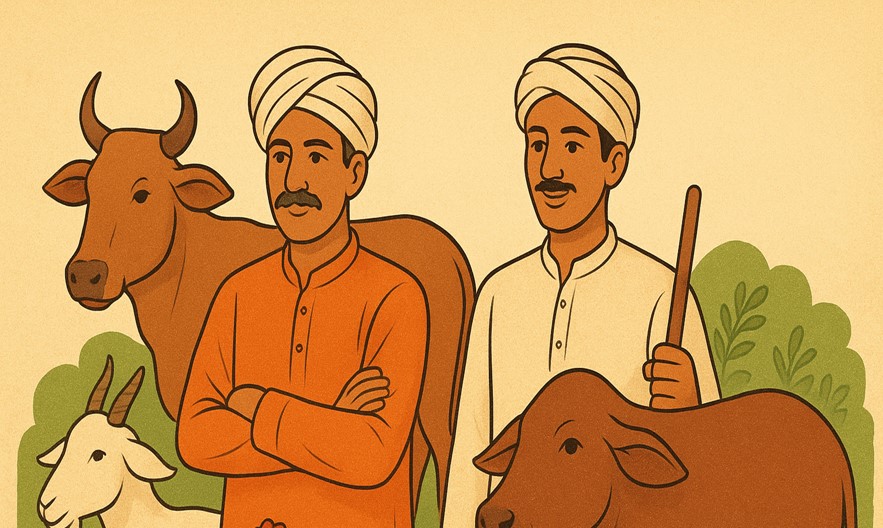
Table of Contents
Introduction: Animals and Human Life
Since ancient times, animals have been close companions of human beings. They help us in farming, transportation, security, and even emotional support.
In India, where agriculture is the main occupation, domestic animals play an important role in rural life.
From cows and buffaloes that give milk, to horses and camels that carry loads, to dogs and cats that live with us — each animal serves a unique purpose.
India is a country where animals are not just helpers but are often treated with love and respect.
In this essay, we will discuss the different types of domestic animals in India, their uses, importance, and the need to protect them.
What Are Domestic Animals?
Domestic animals are those that are tamed and trained by humans to help in daily life. They live near humans and depend on them for food, shelter, and care.
Unlike wild animals, domestic animals are friendly and cooperative. They are used for agriculture, dairy, transport, security, and companionship.
Examples of Domestic Animals in India
- Cow
- Buffalo
- Goat
- Sheep
- Horse
- Camel
- Donkey
- Dog
- Cat
- Hen
- Duck
Each of these animals plays a special role in human life, especially in rural India.
Importance of Domestic Animals in Indian Society
Domestic animals are a part of India’s cultural, social, and economic life.
They provide milk, meat, wool, leather, eggs, and transportation.
They also help in farming, guarding homes, and keeping companionship.
Let’s explore some major roles of domestic animals in India.
Types of Domestic Animals and Their Uses
a. Cows and Buffaloes
- Cows and buffaloes are the most common domestic animals in India.
- They provide milk, which is an essential part of the Indian diet.
- From milk, people make butter, ghee, curd, and cheese.
- Dung is used as fertilizer and fuel in villages.
- Buffaloes and Oxen are strong animals used for plowing fields and carrying goods.
b. Goats and Sheep
- Goats provide milk and meat, and it is easily available in the Indian villages.
- Sheep provide wool, which is used to make warm clothes like sweaters and blankets.
- Both animals are raised in large numbers in India.
Example: Kashmir is famous for Pashmina wool that comes from special Himalayan goats.
c. Horses, Camels, and Donkeys
- These animals are mainly used for transportation and carrying loads.
- Horses are fast and strong, used for riding, sports, and parades.
- Camels, known as the “ship of the desert”, are used in Rajasthan for carrying people and goods across sandy areas.
- Donkeys are used in villages and construction sites to carry materials like bricks and sand.
Even in modern times, these animals are essential in remote and rural regions where machines cannot reach easily.
d. Dogs and Cats
- Dogs are known as faithful animals and loyal friends of humans.
- They are used for guarding homes, police work, and rescue operations.
- Cats are calm and clean pets. They help keep homes free from rats and pests.
- Both dogs and cats provide emotional comfort and companionship to people.
In cities, pet dogs and cats are part of many families and treated like family members.
e. Poultry: Hens and Ducks
- Hens and ducks are kept for eggs and meat.
- Poultry farming is an important business in India, providing employment to millions.
- Eggs are rich in protein, making them an important food source.
- Ducks are also raised in regions like Kerala and West Bengal, where they live in water bodies.
Poultry farming helps India meet its growing food needs and improves rural income.
f. Other Domestic Animals
- Elephants are used for carrying heavy loads and in temples during festivals.
- Rabbits are raised for fur and as pets.
- Pigeons and parrots are kept as hobby birds or for communication in earlier times.
Each domestic animal has its own role, and together, they make human life easier and more comfortable.
Economic Importance of Domestic Animals
Domestic animals are a major part of India’s economy, especially in the rural sector.
- Dairy Industry: India is the world’s largest producer of milk, thanks to cows and buffaloes.
- Poultry Industry: Provides eggs and meat to millions daily.
- Wool and Leather Industry: Comes from sheep, goats, and cattle.
- Transport: Animals like camels and donkeys still help in hilly and desert regions.
Besides income, these animals also support employment for farmers, herders, milkmen, and traders.
Problems Faced by Domestic Animals
Despite their importance, many domestic animals suffer from neglect, abuse, and poor living conditions.
a. Poor Shelter and Food
- Many animals in villages and cities don’t get enough food or clean water.
- Street animals like stray dogs and cows suffer from hunger and injuries.
b. Cruelty and Exploitation
- Some animals are forced to work too much or are treated cruelly in markets or circuses.
- Overuse of animals for rides or labor can cause illness and pain.
c. Lack of Veterinary Care
- In rural areas, people don’t have easy access to animal doctors.
- Many animals die from simple diseases that could have been cured.
d. Abandonment
- Some pet owners abandon animals when they grow old or get sick.
- These animals then struggle to survive on the streets.
Protection and Welfare of Domestic Animals
The Indian government and many NGOs work for animal protection and welfare.
Important Steps Taken:
- Prevention of Cruelty to Animals Act (1960) – Protects animals from abuse and neglect.
- Animal Welfare Board of India (AWBI) – Works for animal care and rescue.
- Gaushalas (Cow Shelters) – Provide care for old and abandoned cows.
- Animal Rescue Centers – Help injured or stray animals.
- Vaccination Programs – Control diseases like rabies.
As responsible citizens, we must show kindness to animals and treat them with love and care.
The Role of Domestic Animals in Modern India
Even in today’s modern world, domestic animals are still important.
- Farmers continue to depend on bullocks and buffaloes for plowing.
- The dairy and poultry industries are growing fast, creating jobs.
- Pets are becoming more popular in urban homes.
- Awareness about animal rights and pet adoption is increasing.
With modernization, we must ensure that technology and compassion go hand in hand. Animals deserve comfort and respect, just like humans.
How to Take Care of Domestic Animals
Every person who owns or works with animals should take proper care of them.
Tips for Animal Care
✅ Provide clean food and water daily.
✅ Give them proper shelter away from heat or cold.
✅ Get regular health check-ups and vaccinations.
✅ Show kindness and patience.
✅ Avoid overworking them.
✅ Keep their living area clean.
A little love and care can make animals healthy, happy, and loyal forever.
Conclusion
Domestic animals are true friends and helpers of human beings. They give us milk, eggs, wool, and love. They help in farming, transport, and protecting our homes.
In India, they are a part of our culture, economy, and daily life. But in return, it is our duty to take care of them and protect them from harm.
A society that respects animals becomes more compassionate, peaceful, and kind.
Let us all promise to love, care for, and protect these faithful companions of humanity.
Vocabulary and Phrases: Table
Word / Phrase | Meaning in Hindi |
Domestic Animals | पालतू जानवर |
Dairy Industry | दुग्ध उद्योग / दूध से जुड़ा व्यवसाय |
Companion | साथी / मित्र |
Livestock | पशुधन / खेतों में पाले जाने वाले जानवर |
Fertilizer | खाद / उर्वरक |
Poultry | मुर्गी पालन |
Herders | पशुपालक |
Cruelty | क्रूरता / निर्दयता |
Veterinary Care | पशु चिकित्सा देखभाल |
Adoption | गोद लेना / अपनाना |
Shelter | आश्रय / रहने की जगह |
Milk Production | दूध उत्पादन |
Companion Animal | साथी जानवर / पालतू जानवर |
Gaushala | गायों का आश्रम / गाय संरक्षण स्थल |
Welfare | कल्याण / भलाई |
Abandonment | त्यागना / छोड़ देना |
Animal Rights | पशु अधिकार |
Compassion | दया / करुणा |
Agriculture | कृषि / खेती |