Muslim Eid Festival in India – A Celebration of Faith, Unity, and Joy
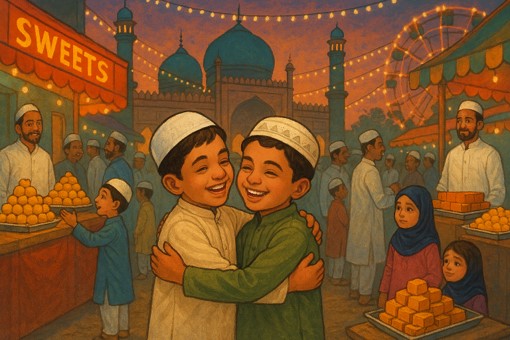
Table of Contents
Introduction: The Spirit of Eid
Eid-ul-Fitr (Festival of Breaking the Fast)
India is a land of many religions, languages, and cultures. Among the many festivals celebrated here, the Muslim Eid Festival holds a very special place. Eid is not just a religious event — it is a time for thankfulness, family gatherings, delicious food, and kindness toward others.
In India, Eid is marked by unique traditions such as offering special prayers at mosques, preparing delicious dishes like biryani, sheer khurma, and seviyan, and dressing in traditional attire. Homes are decorated, and people visit friends and neighbors to exchange greetings and gifts, regardless of religion. This festival fosters a sense of brotherhood, as communities come together to celebrate and share joy.Eid-ul-Fitr (Festival of Breaking the Fast)
This Eid festival has a deep religious meanings and teach important values like faith, generosity, unity, and compassion.
The Meaning and Importance of Eid
Eid means “festival” or “celebration” in Arabic. It is a time to express gratitude to Allah for His blessings and to spread peace and happiness.
Muslims in India celebrate Eid with great excitement and joy. The celebration shows the spirit of brotherhood and equality among people, no matter their background, language, or wealth.
On Eid, Muslims greet each other with “Eid Mubarak,” which means “Blessed Eid.” This greeting is shared with family, friends, and even strangers, spreading smiles and warmth everywhere.
Eid-ul-Fitr: The Festival of Breaking the Fast
The Month of Ramadan
Before Eid-ul-Fitr, Muslims observe Ramadan, the holy month of fasting. During Ramadan, they fast from sunrise to sunset, avoiding food and drink during the day.
This fasting is not just about avoiding food — it is about self-control, patience, and spiritual growth. Muslims also spend time reading the Quran, praying, and helping the poor.
The Day of Eid-ul-Fitr
Eid-ul-Fitr is celebrated on the first day of the Islamic month of Shawwal, right after Ramadan ends.
On this day:
- People wake up early and take a special bath (called ghusl).
- They wear new or clean clothes.
- They offer special Eid prayers (Namaz-e-Eid) in large open grounds or mosques.
- They give Zakat-ul-Fitr (charity) to help the poor before the prayer, so everyone can enjoy the festival.
After the prayer, people greet each other and enjoy delicious dishes like seviyan (sweet vermicelli), biryani, and kebabs. Children receive Eidi (gifts or money) from elders. The whole day is filled with joy, laughter, and sharing.
Eid Celebrations in Different Parts of India
India is home to more than 200 million Muslims, and each region adds its own local touch to Eid celebrations.
- Delhi and Lucknow: Streets are filled with the aroma of biryani and kebabs. Mosques like Jama Masjid host large prayers, and markets like Chandni Chowk are beautifully decorated.
- Hyderabad: Known for its grand feasts of Haleem and Nihari. Families gather to share traditional Hyderabadi dishes.
- Kolkata: Muslims visit Nakhoda Mosque for prayers and enjoy sweet dishes like sheer khurma.
- Kerala: Eid is celebrated with a blend of Arabic and South Indian traditions, and charity plays a big role.
Each region may have different food or customs, but the spirit of love, unity, and thankfulness remains the same everywhere.
The Role of Eid in Promoting Values
Eid is not just a festival of food and joy — it is a lesson in humanity. It teaches important values that make society better:
- Charity (Zakat): Helping the poor and needy.
- Brotherhood: Strengthening relationships between families and communities.
- Forgiveness: Letting go of anger and starting fresh.
- Gratitude: Thanking Allah for His blessings.
- Equality: Everyone prays together, rich or poor, showing no difference between people.
These values make Eid not only a religious celebration but also a social and moral guide.
Eid During COVID-19: A New Way of Celebration
During the COVID-19 pandemic, Eid celebrations changed in India. People could not go to mosques or visit families freely. Many celebrated at home, offering prayers privately and sending Eid wishes online.
Even though the gatherings were small, the spirit of Eid remained strong. It reminded people that true celebration is about faith, gratitude, and helping others, not just grand parties or new clothes.
The Beauty of Eid in Indian Culture
One of the most beautiful aspects of Eid in India is the way it blends Islamic faith with Indian culture. People of different religions often visit each other’s homes to share sweets and greetings. This creates a sense of unity in diversity, which is the true identity of India. The streets come alive with festivity, and the atmosphere is filled with warmth and generosity, especially through the practice of giving zakat (charity) and helping the less fortunate.
Eid brings hope, love, and peace — values that every human heart understands, no matter what religion they follow.
In essence, Eid in Indian culture is not just a festival—it is a celebration of love, peace, and unity in diversity.
Conclusion
The Muslim Eid Festival in India is more than a religious occasion — it is a celebration of life, faith, and togetherness. It teaches us to be grateful, to care for others, and to live in peace.
Whether it is Eid-ul-Fitr or Eid-ul-Adha, the message is clear: “Serve humanity and thank the Almighty.” In a diverse country like India, Eid stands as a symbol of unity, compassion, and joy, inspiring everyone to share love and kindness.
Vocabulary and Phrases: Table
Word / Phrase | Meaning in Hindi |
Eid Mubarak | ईद की शुभकामनाएँ / Happy Eid |
Ramadan | रमज़ान का महीना (उपवास का महीना) |
Fasting | रोज़ा रखना / उपवास करना |
Zakat | दान / Charity given to the poor |
Namaz | नमाज़ / Prayer |
Qurbani | कुर्बानी / Sacrifice |
Brotherhood | भाईचारा / Unity among people |
Gratitude | कृतज्ञता / Thankfulness |
Forgiveness | क्षमा / माफ़ करना |
Unity in Diversity | विविधता में एकता / Harmony among cultures |
Faith | ईमान / विश्वास |
Compassion | दया / Kindness |
Celebration | उत्सव / जश्न |
Charity | परोपकार / Helping others |
Harmony | मेल-जोल / Peaceful coexistence |
Eid-ul-Fitr | ईद-उल-फितर / Festival after Ramadan |
Eid-ul-Adha | ईद-उल-अज़हा / Festival of Sacrifice |
Eidi | ईदी / Gift or money for children |
Mosque | मस्जिद / Place of Muslim prayer |
Sheer Khurma | सेवइयाँ / Sweet milk dessert |